Editverse: SYRCLE Risk of Bias Tool

SYRCLE Risk of Bias Tool: 10 Entries Applied to a Real Animal Meta-Analysis

The SYRCLE risk of bias tool is a widely used way to judge internal validity in a systematic review of animal intervention studies. It has ten entries that cover selection, performance, detection, attrition and reporting bias plus a catch-all for other problems, and every entry is rated low, high or unclear. This guide explains each entry, compares the tool with the CAMARADES quality checklist, and…

Editverse: ARRIVE 2.0 Checklist

ARRIVE 2.0 Checklist: The Essential 10 Applied to a Real Rat Study

The ARRIVE 2.0 checklist has 21 items, and ten of them decide whether a reviewer can trust an animal study at all. Those ten, called the Essential 10, cover the study design, sample size, exclusions, randomisation, blinding, outcomes, statistics, animals, procedures and results. This guide applies every one of them to a real open-access rat study, names the section where each answer sits, and marks…

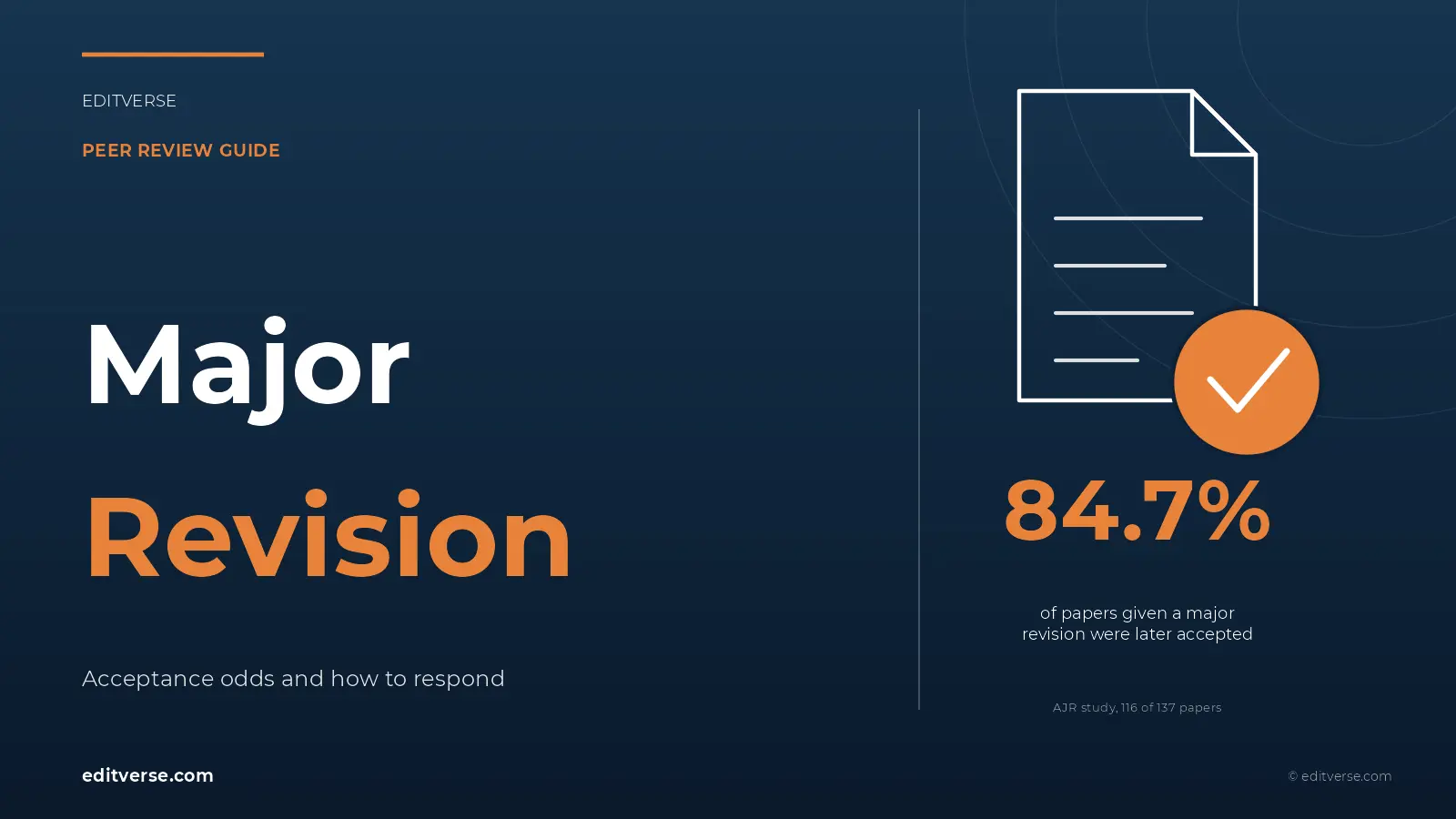
Cover graphic for the Editverse guide to major revision decisions: a document with a check mark and the figure 84.7% of papers given a major revision were later accepted.

Major Revision Decision: What It Means, Acceptance Odds and How to Respond

A major revision decision means the editor has not said no. The editor wants your paper, but only after real changes. In the best-documented dataset, 116 of 137 papers that got a major revision at first decision, or 84.7%, were later accepted[1]. This guide gives you the numbers from published studies, a clear timeline, and a step-by-step way to answer the reviewers. In Simple Words…