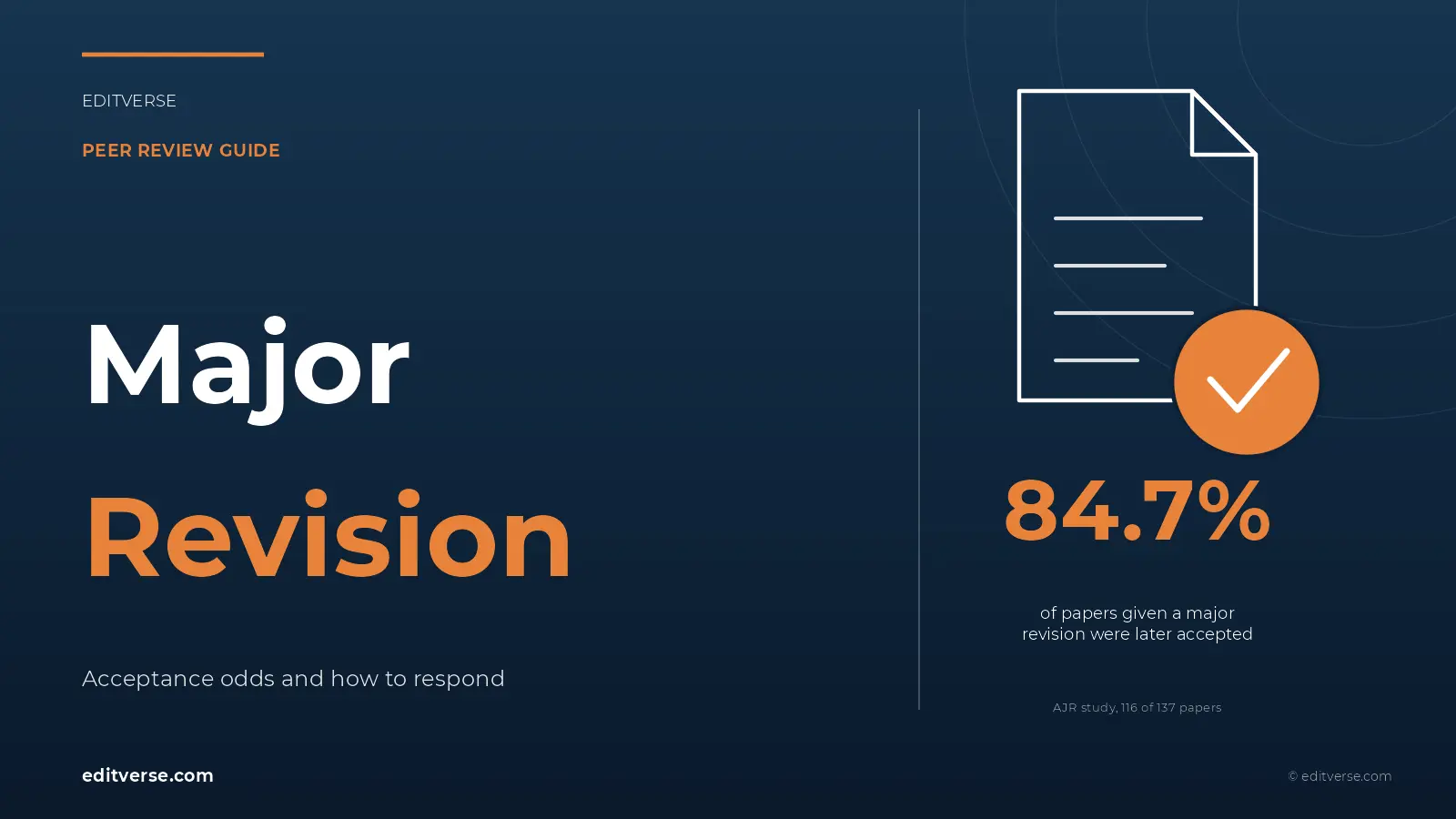
Cover graphic for the Editverse guide to major revision decisions: a document with a check mark and the figure 84.7% of papers given a major revision were later accepted.

Major Revision Decision: What It Means, Acceptance Odds and How to Respond

A major revision decision means the editor has not said no. The editor wants your paper, but only after real changes. In the best-documented dataset, 116 of 137 papers that got a major revision at first decision, or 84.7%, were later accepted[1]. This guide gives you the numbers from published studies, a clear timeline, and a step-by-step way to answer the reviewers. In Simple Words…
How to Publish a Single-Case Experimental Design Study

How to Publish a Single-Case Experimental Design Study

A manuscript comes back from review. The methods are sound, the data are clean, and the reviewer’s first comment is: “This is an interesting case, but with n=1 and no control group, the design does not support the conclusions.” The problem is not the research. It is that the reviewer read a single-case experimental design as a case report, and nobody in the manuscript told…

dental research trend analysis

Analyze Trends: Forecasting Methods That Predict Future Directions in Dental Science

Our ‘dental research trend analysis’ provides insights into the latest trends and future directions in dental research and practice.

Editverse: Build Your Legacy

Build Your Legacy: Long-Term Strategies for Creating Lasting Scientific Contributions

Establish your dental research legacy with our expert support. Read our case study on proven strategies for long-term scientific impact.

Editverse: Change Management Skills for Revolutionary Dental Research Programs

Lead Transformation: Change Management Skills for Revolutionary Dental Research Programs

Master dental research transformation leadership with our expert guide. Learn effective change management skills for revolutionary dental research programs.