
Published
The BRAIN 2025 report was a big step in brain research, aiming to speed up tech development for ten years. As we explore synthetic organs, ethics, and bioethics, we see how fast brain preservation research is moving. It’s key to mix neuroscience and neuroethics to create new tech for understanding and treating brain disorders.
We know a lot about publishing in the field of synthetic organs, artificial human organs, and bioethics. We stress the need for a full approach, looking at the ethics of making synthetic organs. This way, we can make sure these new advances help human health while keeping ethics and integrity high.
Key Takeaways
- The BRAIN Initiative aims to accelerate technology development over a ten-year period, beginning in FY2016.
- Synthetic organs have the potential to revolutionize healthcare, but raise complex ethical questions.
- Integrating neuroscience and neuroethics is crucial for the development of innovative technologies.
- Artificial human organs and bioethics must be considered in the context of synthetic organ development.
- Ethical considerations must be prioritized to ensure the responsible development of synthetic organs.
- Our expertise in academic publishing guides us in navigating the complex landscape of synthetic organs and bioethics.
Understanding Synthetic Organs
Synthetic organs are key in solving the organ donor shortage and bettering patient care. Synthetic biology is making it possible to create bio-artificial organs. These could replace or support failing human organs. This idea is closely linked to organ transplantation, offering a new way to deal with the shortage of donor organs.
The creation of synthetic organs brings up big questions about medical ethics. These include how to fairly share limited resources and if all transplants should be covered by public funding. As we look into synthetic organs, we must think about the ethical sides of these advancements. We also need to consider how they might change the field of organ transplantation.
The first successful organ transplants happened in the 1950s and 1960s. The first living related kidney transplant was in 1954. Since then, organ transplantation has made big strides. Advances in synthetic biology are now opening up new ways to make bio-artificial organs.
Definition and Importance
Synthetic organs are made to act like natural organs. They could help solve the organ donor shortage. Their importance is in the chance to better patient care and tackle the ethical issues of organ transplantation.
Historical Context
The making of synthetic organs comes from the history of organ transplantation. This field has grown a lot over decades. From the first kidney transplants to today’s synthetic biology, organ transplantation keeps getting better. Synthetic organs are a new and exciting area for research and development.
Methods of Synthetic Organ Development
Technological advancements are changing how we make synthetic organs. Tissue engineering and 3D bioprinting are leading the way. These methods could change how we get organs for transplants, helping to meet the huge demand.
These new technologies could make transplants safer and faster. Sadly, about 20 people die each day in the U.S. because they can’t get a transplant. This shows we really need new ways to get organs.
Tissue Engineering
Tissue engineering uses cells, materials, and chemicals to make new tissues. It’s a promising way to make organs like kidneys and livers that work like the real thing.
3D Bioprinting
3D bioprinting builds organs layer by layer with cells and materials. It’s been used to make hearts and lungs for transplants. This method is very exciting.
Thanks to these technologies, we might soon have more organs available for transplants. As research gets better, we’ll see even more progress. This could lead to better health and happier lives for many people.
Ethical Considerations in Synthetic Organ Development
As we push forward in synthetic organ development, ethical considerations grow more critical. The making and use of artificial organs bring up tough moral and ethical questions. Our team sees the importance of clear and ethical ways to develop and use synthetic organ tech.
The role of bioethics is key in our choices. We must think about the outcomes of our actions. We need to make sure they match with regulatory frameworks. This means following laws about research on humans, tissue engineering, and organ transplants.
Important ethical points in synthetic organ development include:
- Respect for human dignity and autonomy
- Protection of human rights and welfare
- Ensuring informed consent and transparency
- Addressing issues of justice and fairness
By focusing on ethical considerations and following regulatory frameworks, we aim for the safety and well-being of humans. As we advance, it’s vital to keep talking and debating the bioethics of synthetic organ development.
The Role of Technology in Synthetic Organ Development
Technological advancements play a big role in making synthetic organs. This is true for tissue engineering and 3D bioprinting. These methods help create tissues and organs that fit specific needs. For example, 3D bioprinting technology has changed how scientists study organs and diseases.
New ways to reprogram and edit genes, along with AI, have opened up new possibilities. This has led to the creation of new cell types. These advancements have made it easier to develop synthetic organs. The use of tissue engineering and 3D bioprinting has also led to the creation of organoids and organs-on-chips. These have greatly helped regenerative medicine.
Advances in Tissue Engineering
Creating safe and ethical synthetic organs is key. As we improve in tissue engineering and 3D bioprinting, we must also tackle the shortage of donor organs. Synthetic organs could soon be available for transplant, changing organ transplantation forever.
The Future of 3D Bioprinting
The field of synthetic organ development is growing fast. This is thanks to new biotechnology and computational methods. It’s important to think about how these advancements will help us make better synthetic organs. This way, we can use these technologies to make people’s lives better.
Synthetic Organs and Organ Transplantation
We see the chance for synthetic organs to solve the organ donor shortage and better patient outcomes in organ transplants. Synthetic organs could be a good option instead of using real organs. This could lower the need for human donors and the chance of organ rejection.
But, using synthetic organs brings up big questions about fairness and cost. For example, the Carmat heart, a full artificial heart, might cost over $250,000. This makes it hard for many patients to get.
Still, synthetic organs could change organ transplantation for the better. They could help fix the organ donor shortage and give more people a chance at a transplant. This could also cut down the time patients wait for a transplant.
- Reducing the reliance on human donors
- Decreasing the risk of rejection
- Improving patient outcomes
As we keep working on synthetic organ tech, we must think about the big ethical questions. We need to make sure these organs are available to those who really need them. By focusing on organ transplantation and solving the organ donor shortage, we can aim for a future where everyone gets the organs they need to live well.
Regulatory Frameworks for Synthetic Organs
Clear and consistent rules are key for synthetic organs. As we explore this field, we must set guidelines for safe and ethical use. Right now, there’s a gap in FDA rules for 3D printing with biological materials. This can cause problems with quality and use.
Rules for 3D bioprinted organs vary worldwide, making it hard to develop synthetic organs. Future directions for rules should focus on patient safety, how well they work, and making them available. Important points for rules include:
- Clear guidelines for making and testing synthetic organs
- Following current rules and standards
- A system for checking and approving synthetic organs
When thinking about regulatory frameworks for synthetic organs, we must balance innovation with safety and effectiveness. Working together to create clear guidelines will help. This way, synthetic organs can help patients and society. The future of synthetic organs relies on a good regulatory environment that supports innovation and protects health.
In the United States, over 116,000 people are waiting for organs, and the list grows every 10 minutes. Synthetic organs could help solve this problem and improve care. By focusing on clear rules, we can make sure synthetic organs are safe, work well, and are available to those who need them.
Public Perception and Acceptance of Synthetic Organs
Understanding public perception of synthetic organs is key. It affects how this technology is developed and used. Studies show that ethical concerns greatly influence what people think. Many worry about the risks and benefits of synthetic organs.
To tackle these worries, educational initiatives are vital. They help people understand synthetic organ technology better. For example, a survey found that 69.2% of people think using AI in liver allocation is okay. Also, 72.7% said they’d still donate organs even with AI involved.
Several things affect how people see synthetic organs:
- How fair and accurate decisions are made
- How clear and consistent the process is
- How urgent the need is and how likely the recipient will survive
- The quality and length of life gained
As we improve synthetic organ tech, we must address ethical concerns. We also need to promote educational initiatives. This will help people understand and accept these technologies better.
| Category | Percentage |
|---|---|
| Acceptable use of AI in liver allocation | 69.2% |
| Willingness to donate organs if AI is used in allocation | 72.7% |
The Future of Synthetic Organs
Synthetic organs are set to play a big role in solving the organ shortage. Over 100,000 people in the U.S. are waiting for a transplant. New trends like 3D printing and biocompatible materials are leading the way.
Synthetic organs could be used for transplants, drug testing, and more. Scientists are working on making them as good as real organs. They aim to reduce rejection risks and improve patient results. Artificial intelligence and machine learning will likely help make these organs better.
Some key areas to watch in synthetic organ development include:
- Creating organs for transplants like hearts, livers, and kidneys
- Developing materials that are safe for the body
- Using 3D printing for complex organ structures
As research moves forward, we’ll see better synthetic organs. They could change organ transplantation forever. Synthetic organs are an exciting and fast-growing field.
| Year | Number of People on Waiting List | Number of Transplants Performed |
|---|---|---|
| 2020 | 100,000 | 30,000 |
| 2025 (projected) | 120,000 | 40,000 |
Synthetic Organs and Medical Ethics
As we work on synthetic organs, we must think about medical ethics. These ethics help us use synthetic organs responsibly. They guide us in making sure these organs are developed and used right.
Medical ethics help us think about who gets synthetic organs and how they are used. We need to make sure these organs are safe and work well. We also need to follow the principles of medical ethics.
Some important things to consider when using medical ethics with synthetic organs include:
- Respect for autonomy: making sure people can make their own health choices
- Non-maleficence: making sure synthetic organs don’t harm anyone
- Beneficence: helping people and society by using synthetic organs wisely
- Justice: making sure everyone has fair access to synthetic organs
By thinking about medical ethics and synthetic organs, we can use these technologies right. This means talking and working together with many people, like researchers and patients.
| Principle of Medical Ethics | Application to Synthetic Organs |
|---|---|
| Respect for autonomy | Ensuring informed decision-making about synthetic organ use |
| Non-maleficence | Avoiding harm and ensuring safety and efficacy |
| Beneficence | Promoting well-being and best interests of patients and society |
| Justice | Ensuring fair distribution and equitable access |
Synthetic Organs and Bioethics
As we work on making synthetic organs better, we must think about bioethics. Bioethics helps us make sure these new organs are good for people and respect their dignity.
Creating synthetic organs makes us ask big questions. Respecting patient autonomy is key, so people can decide what’s best for them. We also need to make sure these organs are safe and help patients the most.
Some important bioethical points to keep in mind are:
- Ensuring informed consent from patients receiving synthetic organs
- Respecting the autonomy of patients in making decisions about their care
- Prioritizing the safety and well-being of patients
As we progress, we must keep bioethics at the forefront. This way, we can make sure these new organs are used wisely and for the betterment of society.
Synthetic Organs and Organ Donation
The organ donor shortage affects many patients in need of transplants. Over 100,000 people in the U.S. are waiting, and 30 die daily. Synthetic organs could help, but we must think about the ethical considerations.
Using synthetic organs could save lives and increase organ availability. But, we must weigh the ethical implications. It’s key to keep patients safe and ensure they have good treatment options.
To tackle the organ donor shortage, we need to focus on ethical considerations for synthetic organs. We must inform patients and prioritize their safety. Working together, we can make organ donation fairer and more effective.
Synthetic Organs and Healthcare
We are on the edge of a healthcare revolution. Synthetic organs could change how we care for patients. They might solve the organ shortage and offer new treatments for failing organs.
Synthetic organs could lead to many breakthroughs in healthcare. They might help create better implants and bioartificial organs. Future advancements could include using 3D printing to make custom organs and tissues.
Here are some key ways synthetic organs could impact healthcare:
- Organ transplantation: They could help solve the organ shortage and offer new treatments for failing organs.
- Regenerative medicine: Synthetic organs could lead to new treatments for diseases like heart disease and diabetes.
- Personalized medicine: They could be tailored to fit individual patients, leading to more effective treatments.
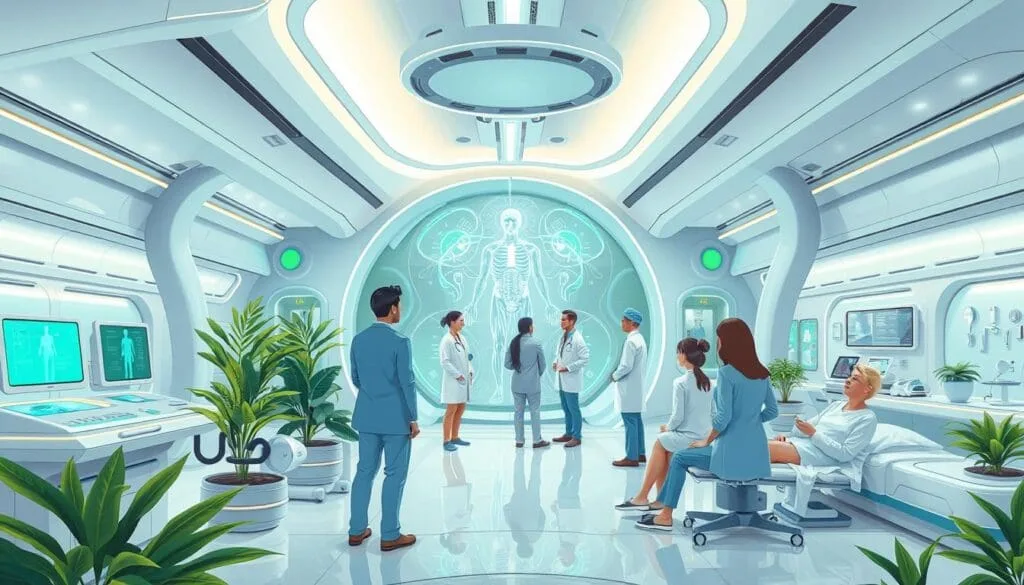
In the future, synthetic organs will be crucial in healthcare. With technology and research improving, we can expect to see more innovative uses of synthetic organs.
| Potential Application | Description |
|---|---|
| Implantable devices | Creation of implantable devices, such as pacemakers and prosthetic joints |
| Bioartificial organs | Development of bioartificial organs, such as liver and kidney assist devices |
| 3D printing and bioprinting | Use of 3D printing and bioprinting technologies to create customized organs and tissues |
Conclusion
The future of synthetic organs looks bright. We’ve seen big steps forward in this field. These advancements could change healthcare and society a lot.
There are still challenges to face, but the benefits are clear. We can help solve the organ shortage and make patients’ lives better.
Summary of Key Points
We’ve looked at how to make synthetic organs, from tissue engineering to 3D bioprinting. We’ve also talked about the rules and ethics that guide this work. It’s important to keep talking and innovating responsibly.
Technology is key in making synthetic organs better. People’s views on these new treatments are changing too.
Future Perspectives
The future of synthetic organs is exciting. More research will make these technologies even better. We’ll work on the ethical and legal issues to make sure they’re safe and work well.
Having synthetic organs could save many lives. It could change healthcare for the better. By keeping up with this field, we can make synthetic organs a reliable option for everyone.
FAQ
What are synthetic organs and why are they important?
Synthetic organs are man-made organs made to replace or help natural ones. They’re key because they could solve the organ shortage. They also bring new hope through tissue engineering and 3D bioprinting.
What are the methods used to develop synthetic organs?
To make synthetic organs, we use tissue engineering and 3D bioprinting. Tissue engineering grows cells and scaffolding into organ-like structures. 3D bioprinting layers biological materials to build complex organs.
What are the ethical considerations surrounding synthetic organ development?
Making synthetic organs raises ethical questions. We must follow bioethical rules like doing good and not harming. We also need clear rules to make sure these organs are safe and fair.
How are technological advancements shaping the field of synthetic organ development?
New tech in tissue engineering and 3D bioprinting is changing how we make synthetic organs. These advances help us create more complex and useful organs. They’re helping solve the organ shortage.
What are the potential applications of synthetic organs in healthcare?
Synthetic organs could help a lot in healthcare. They could solve the organ shortage and improve patient care. But, we must check their safety and work to use them wisely.
How are regulatory frameworks and public perception shaping the development of synthetic organs?
Rules and public views are key in making synthetic organs. Good rules help keep them safe and fair. Also, understanding and supporting these organs is important for their future.
What are the principles of medical ethics and how do they apply to synthetic organ development?
Medical ethics guide us in making synthetic organs. We must do good, avoid harm, respect choices, and be fair. Following these rules is vital for using these new technologies right.
How do synthetic organs relate to the issue of organ donation and the organ donor shortage?
Synthetic organs could help with the organ shortage. They offer a new way for transplants. But, we need to think about how they affect organ donation and fairness.
Source Links
- http://braininitiative.nih.gov/vision/nih-brain-initiative-reports/brain-2025-scientific-vision – BRAIN 2025: A Scientific Vision
- http://braininitiative.nih.gov/vision/nih-brain-initiative-reports/brain-20-neuroethics-enabling-and-enhancing-neuroscience – BRAIN 2.0 Neuroethics: Enabling and Enhancing Neuroscience Advances for Society
- https://geiselmed.dartmouth.edu/fic/ppt/aboud_m_ethical_issues.pdf – Overview ethical issues-Aboud
- https://pmc.ncbi.nlm.nih.gov/articles/PMC3935394/ – Bioethics of Organ Transplantation – PMC
- https://youthmedicaljournal.com/2020/10/05/artificial-organs-a-social-and-ethical-analysis/ – Artificial Organs: A Social and Ethical Analysis
- https://elifesciences.org/articles/20674 – Addressing the ethical issues raised by synthetic human entities with embryo-like features
- https://openpublichealthjournal.com/VOLUME/13/PAGE/62/FULLTEXT/ – Social and Ethical Impact of Advanced Artificial and Biological Enhancements
- https://link.springer.com/chapter/10.1007/978-1-4757-4369-2_10 – Ethical and Moral Problems in the Use of Artificial and Transplanted Organs
- https://pmc.ncbi.nlm.nih.gov/articles/PMC10212693/ – Building the future of synthetic organ manufacturing and healthcare
- https://www.frontierspartnerships.org/journals/transplant-international/articles/10.3389/ti.2022.10751/full – Frontiers Publishing Partnerships | Early-Phase Clinical Trials of Bio-Artificial Organ Technology: A Systematic Review of Ethical Issues
- https://vce.usc.edu/volume-1-issue-1/the-ethics-of-artificial-organs/ – The Ethics of Artificial Organs – Viterbi Conversations in Ethics
- https://optn.transplant.hrsa.gov/professionals/by-topic/ethical-considerations/ethical-principles-in-the-allocation-of-human-organs/ – Ethics – Ethical Principles in the Allocation of Human Organs
- https://libraetd.lib.virginia.edu/downloads/b8515p13m?filename=Kang_Kaylen_STS_Research_Paper.pdf – Microsoft Word – STS Research Paper
- https://scholarship.law.upenn.edu/cgi/viewcontent.cgi?article=9610&context=penn_law_review – FDA Regulation of 3D‐Printed Organs and Associated Ethical Challenges
- https://bmcmedethics.biomedcentral.com/articles/10.1186/s12910-023-00983-0 – Should AI allocate livers for transplant? Public attitudes and ethical considerations – BMC Medical Ethics
- https://www.intechopen.com/chapters/19040 – Ethical Controversies in Organ Transplantation
- https://www.linkedin.com/pulse/synthetic-organ-designer-designing-organs-future-obada-hattab – Synthetic Organ Designer: Designing Organs of the Future
- https://idstch.com/technology/biosciences/creating-a-new-future-the-rise-of-synthetic-organs-and-its-impact-on-healthcare/ – Creating a New Future: The Rise of Synthetic Organs and its Impact on Healthcare – International Defense Security & Technology
- https://pmc.ncbi.nlm.nih.gov/articles/PMC9297460/ – Ethics of Early Clinical Trials of Bio-Artificial Organs
- https://www.frontierspartnerships.org/journals/transplant-international/articles/10.3389/ti.2024.13011/full – Frontiers Publishing Partnerships | Ethical and Legal Aspects of Organ Donation and Transplantation
- https://journalofethics.ama-assn.org/article/ethics-organ-transplantation-brief-history/2012-03 – The Ethics of Organ Transplantation: A Brief History
- https://sites.ualberta.ca/~pflaman/organtr.htm – Organ Transplants: Ethical Issues
- https://www.bbc.com/news/world-59951264 – Three ethical issues around pig heart transplants
- https://www.thehastingscenter.org/ethics-and-organ-transplantation/ – Ethics and Organ Transplantation
- https://www.pbs.org/wgbh/pages/frontline/shows/organfarm/regulators/clark.html – The Regulators – Ethical Issues | Organ Farm | FRONTLINE
- https://pmc.ncbi.nlm.nih.gov/articles/PMC10155689/ – Ethics of allocation of donor organs
- https://yaledailynews.com/blog/2019/10/14/bioethicists-guide-researchers-in-artificial-organ-studies/ – Bioethicists guide researchers in artificial organ studies
- https://link.springer.com/10.1007/978-3-319-09483-0_27 – Artificial Organs