Colorectal cancer is the third most commonly diagnosed cancer in the United States, yet it is also one of the most preventable. This startling fact underscores the critical importance of regular screening. When your doctor recommends a colon examination, understanding your options is the first step toward proactive health management.
We recognize that navigating the choice between these two diagnostic procedures can seem complex. Both tests serve vital roles in detecting abnormalities within the large intestine. They utilize a thin, flexible tube equipped with a camera to provide a clear view of the colon’s interior lining.
The fundamental distinction lies in the extent of the examination. One procedure investigates the entire five-foot length of the large intestine. The other focuses specifically on the final segment. This key difference influences preparation, duration, and overall purpose.
Our goal is to provide authoritative, evidence-based information to clarify these essential medical tests. We break down complex terminology into clear, understandable concepts. This empowers you to have an informed discussion with your healthcare provider about which screening option aligns with your individual health profile.
Key Takeaways
- Colorectal cancer is highly preventable with proper screening, making informed choices critical.
- Two main procedures exist for examining the colon, each with a distinct scope.
- The primary difference involves the amount of the large intestine examined during the test.
- Both methods use a camera-equipped tube to visualize the interior of the colon.
- Understanding these options helps you participate actively in your healthcare decisions.
- This guide provides clear comparisons to prepare you for discussions with your doctor.
Introduction: Uncovering the Importance of Colon Exams
Each year, colorectal cancer claims tens of thousands of American lives, positioning it as the third deadliest cancer in the nation. This sobering reality underscores why preventive screening represents one of modern medicine’s most effective cancer prevention strategies.
Shocking Statistics and Real Patient Stories
The landscape of colorectal cancer has shifted dramatically in recent years. In 2021, medical authorities lowered the recommended screening age from 50 to 45 years. This change reflects alarming trends showing increased incidence among younger adults.
Dr. Jennifer Davids emphasizes the urgency: “It’s very important to get the word out for everybody that’s between the ages of 45 and 50 that they need to catch up.” Her insight challenges the outdated belief that this cancer only affects older populations.

Many patients face diagnostic challenges because symptoms like belly pain and rectal bleeding often mimic common digestive issues. Dr. Scott Steele notes this creates confusion about when to seek medical evaluation.
Overview of Preventive Screenings and Early Detection
Regular screening allows doctors to detect precancerous polyps before they transform into cancer. This proactive approach can interrupt the disease process entirely rather than merely catching it early.
The most effective screening test is ultimately the one that patients complete. Understanding available options helps overcome barriers like fear or inconvenience that might prevent people from pursuing potentially life-saving examinations.
| Age Group | Recommended Screening | Frequency | Primary Benefit |
|---|---|---|---|
| 45-50 years | Initial colon exam | Every 10 years | Baseline assessment |
| 50-75 years | Regular screening | As recommended | Ongoing prevention |
| High-risk individuals | Earlier/more frequent | Individualized | Targeted protection |
Early detection through proper screening dramatically improves treatment outcomes. When colorectal cancer is caught at localized stages, five-year survival rates exceed 90%.
Medical Insights and Guidelines for Colon Examinations
The medical community has established comprehensive screening guidelines that stratify recommendations based on individual risk profiles. We present evidence-based protocols developed through extensive clinical research and expert consensus.
Peer-Reviewed Studies, ASA/WHO Guidelines, and Expert Quotes
Current guidelines reflect significant epidemiological shifts. The American Cancer Society now recommends screening initiation at age 45, a critical reduction from previous standards. This change addresses rising incidence rates among younger populations.
Dr. Michael Wallace, a board-certified gastroenterologist, emphasizes: “The updated guidelines represent our evolving understanding of colorectal cancer patterns. Early detection remains our most powerful preventive tool.”
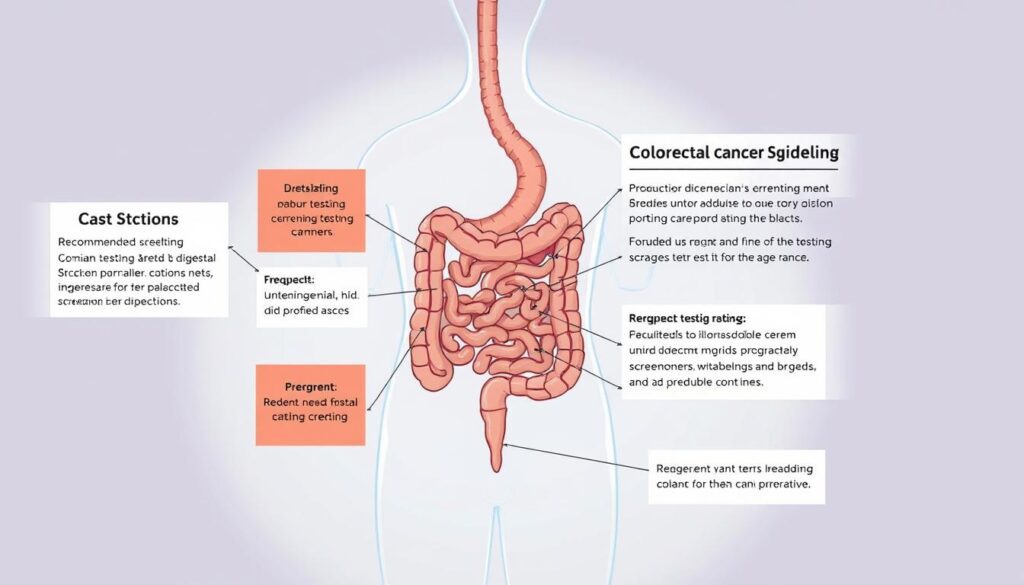
For average-risk individuals, colonoscopy screening occurs every 10 years following negative results. Alternative approaches like flexible sigmoidoscopy combined with annual stool testing offer options for specific patient needs.
Understanding Risk Percentages and Comparative Context
Baseline lifetime risk for colorectal cancer approximates 1 in 23 for men and 1 in 25 for women. This risk increases substantially with family history, genetic conditions, and inflammatory bowel disease.
Polyps represent precancerous growths that develop over years. Their removal during screening procedures effectively interrupts cancer progression. This biological mechanism makes colorectal cancer highly preventable through regular screening.
| Risk Category | Screening Frequency | Recommended Test Type | Special Considerations |
|---|---|---|---|
| Average Risk | Every 10 years | Colonoscopy | Start at age 45 |
| High Risk (Family History) | More frequent | Colonoscopy | Start 10 years before relative’s diagnosis age |
| Genetic Conditions | Individualized | Colonoscopy | Early and frequent surveillance |
| Inflammatory Bowel Disease | More frequent | Colonoscopy | Disease-specific monitoring |
We recommend discussing personal risk factors with your doctor to determine the optimal screening strategy. Individual circumstances significantly influence the choice between different examination types.
Exploring Sigmoidoscopy: A Closer Look at the Lower Colon
This diagnostic method provides a streamlined alternative for evaluating the rectum and descending colon without examining the entire large intestine. We explain this procedure using accessible analogies to demystify the medical terminology.
Procedure Steps and Simple Analogies Explained
The flexible sigmoidoscope resembles a thin, bendable tube about the thickness of your index finger. A tiny camera at the tip functions like a small flashlight, allowing real-time visualization of your lower colon.
During the examination, you’ll lie on your left side while the doctor gently inserts the scope through the anus. The instrument advances slowly into the sigmoid and descending colon. Small amounts of air expand the intestinal walls for better visibility.
Think of this as inspecting the final exit route of your digestive system. The procedure typically lasts about 15 minutes, and most patients remain awake without sedation.
Advantages and Limitations of Sigmoidoscopy
Key benefits include simpler bowel preparation, no sedation recovery time, and lower cost. The examination effectively diagnoses conditions in the lower colon when symptoms suggest localized issues.
However, this approach only examines approximately one-third of your colon on the left side. Problems in the transverse colon, ascending colon, or cecum would be missed during this limited evaluation.
Doctors often recommend this procedure for specific symptoms like rectal bleeding or lower abdominal pain. While it serves as a screening option when combined with stool testing, finding abnormalities typically prompts recommendation for complete colon evaluation.
Sigmoidoscopy vs Colonoscopy: Weighing the Risks and Benefits
Practical factors such as anesthesia requirements, preparation protocols, and recovery expectations play a crucial role in determining which colon examination best suits individual patient needs. We provide clear comparisons to help you understand these essential differences.
Comparative Risk Factors and Benefits
The comprehensive procedure examines the entire large intestine, offering complete visualization but requiring sedation. Serious complications occur in approximately 1 in 1,000 to 1 in 2,000 cases. This risk compares to the likelihood of a car accident during a 200-mile drive.
The targeted examination focuses on the lower colon without typically needing anesthesia. This approach carries significantly lower complication risks. However, it may miss issues in the upper colon sections.

| Factor | Comprehensive Exam | Targeted Exam |
|---|---|---|
| Procedure Duration | 30-45 minutes | 15 minutes |
| Anesthesia Required | Typically yes | Usually no |
| Recovery Time | Several hours | Immediate |
| Screening Frequency | Every 10 years | Every 5-10 years |
Actionable Pre-Surgery Preparation and Recovery Checklists
Preparation for the comprehensive examination involves extensive bowel cleansing starting 1-2 days before your appointment. You’ll follow a clear liquid diet and take prescription laxatives. Arrange transportation since sedation prevents driving afterward.
The targeted test requires simpler preparation, often just enemas or suppositories the morning of your procedure. Most patients can eat a light breakfast and drive themselves home. Recovery involves minimal disruption to daily activities.
Both examinations may cause mild cramping or gas discomfort. These symptoms typically resolve quickly. Discuss any concerns about pain or bleeding with your doctor before scheduling.
Visual Guides and Preparation: Enhancing Patient Understanding
Clear dietary guidelines and visual aids significantly enhance patient readiness for intestinal examinations. We provide comprehensive resources to demystify the preparation process. These tools help patients follow protocols accurately for optimal results.
Infographics, Comparison Tables, and Symptom Timelines
Visual elements clarify the scope and requirements of each examination type. Infographics show the anatomical pathway through the large intestine. Color-coded sections distinguish between areas examined by different procedures.
Symptom timelines help patients distinguish normal preparation effects from concerning symptoms. Expected experiences include frequent bowel movements and mild cramping. Severe pain or bloody diarrhea requires immediate doctor notification.
Diet and Prep Guidelines for a Smooth Procedure
Dietary changes begin several days before your procedure. We recommend transitioning to low-fiber foods 2-3 days in advance. This preparation helps ensure clear visualization of intestinal tissue.
Specific food restrictions prevent residue that could obscure the doctor’s view. Avoid nuts, seeds, and raw vegetables during preparation days. Approved foods include white bread, eggs, and well-cooked vegetables.
Hydration remains critical throughout the preparation process. Drink clear liquids up until the cutoff time specified by your healthcare provider. Sports drinks help maintain electrolyte balance during bowel cleansing.
| Preparation Aspect | Limited Scope Exam | Complete Examination |
|---|---|---|
| Dietary Restrictions | 1-2 days before | 3-5 days before |
| Bowel Cleansing | Enemas/suppositories | Oral laxative solution |
| Procedure Duration | Approximately 15 minutes | 30-45 minutes |
| Recovery Time | Immediate | Several hours |
Patients may need to adjust medication timing before the procedure. Always consult your doctor about blood thinners and diabetes medications. Proper preparation ensures accurate detection of abnormalities including cancer precursors.
Conclusion
Choosing the right colon exam is a powerful step toward proactive health. The key difference lies in the extent of the large intestine examined. One procedure provides a complete view, while the other focuses on the lower section.
Both tests are vital tools for early detection. They allow doctors to spot polyps and abnormal tissue before they develop into serious conditions. Recent clinical evidence confirms that regular screening significantly reduces cancer risk.
We encourage you to discuss any digestive symptoms, like persistent pain or rectal bleeding, with your physician. Your doctor can help you understand if insurance coverage applies and which test type suits your needs.
The most critical decision is to get screened. As experts affirm, the best test is the one you complete. Taking this step is an investment in your long-term well-being.
FAQ
What is the primary difference between a sigmoidoscopy and a colonoscopy?
The main difference lies in the extent of the examination. A sigmoidoscopy allows a doctor to visualize only the lower part of your colon, specifically the rectum and sigmoid colon. A colonoscopy, using a longer scope, examines the entire large intestine. This makes colonoscopy a more comprehensive screening test for colorectal cancer.
How do I know which test is right for me?
The best test for you depends on your personal risk factors, symptoms, and medical history. For individuals with specific symptoms like rectal bleeding or lower abdominal pain, a sigmoidoscopy may be sufficient. However, for standard screening in individuals at average risk for colon cancer, a colonoscopy is often recommended as it can detect problems throughout the entire digestive tract.
Is the preparation for these procedures different?
A> Yes, the bowel prep differs. Preparation for a flexible sigmoidoscopy is typically less intensive, often involving a limited diet and one or two enemas. A colonoscopy requires a more thorough cleansing of the entire large intestine, which usually involves a clear liquid diet and a stronger laxative solution taken the day before the procedure.
Will I be under anesthesia for these exams?
Sedation practices vary. A sigmoidoscopy is frequently performed without anesthesia or with minimal sedation, as the procedure is shorter and may cause only mild discomfort. A colonoscopy almost always involves conscious sedation or deeper anesthesia to ensure patient comfort during the longer examination of the entire colon.
What are the risks associated with each procedure?
Both tests are generally safe, but they carry a small risk of complications. The most common risk for both is perforation (a tear in the colon wall) or bleeding, especially if a polyp is removed. Because a colonoscopy examines more tissue and often involves removing polyps, its associated risks are slightly higher than those of a sigmoidoscopy.
How often should I get screened for colorectal cancer?
Screening guidelines depend on the test and your risk level. For people at average risk, a colonoscopy is typically recommended every 10 years starting at age 45. A sigmoidoscopy may be suggested every 5 years, sometimes combined with a stool-based test. It is crucial to discuss the appropriate screening schedule with your doctor based on your personal health profile.