Nail bed injuries are serious and can affect how your fingers work and look. They are common, hitting fingertips hard1. Knowing how to treat nail bed lacerations right away is key to avoiding bigger problems later.
Crush injuries are common, often happening when fingers get stuck in doors, like car doors1. Most of these injuries happen to people between 4 and 30 years old. It’s important for parents and young adults to know how to prevent and treat these injuries1.
Fixing nail bed injuries needs quick and careful action. Injuries to the fingertips can damage the nail bed in 15-24% of cases1. Acting fast can help the nail grow back normally and avoid scarring or odd nail shapes1.
Key Takeaways
- Nail bed injuries are most common in individuals aged 4-30 years
- Crush injuries, specially from car doors, account for 25% of nail bed traumas
- Proper first aid is crucial for preventing long-term nail complications
- Fingertip injuries can damage the nail bed in 15-24% of cases
- New nail growth may take 3-12 months after injury
Doctors say it’s important to check the injury carefully. Small hematomas under the nail (less than 25% of the nail bed) usually heal on their own1. But, if the injury is bigger or hurts a lot, you might need a doctor to fix it1.
Healing can take a while. It can take 3 to 12 months for a new nail to grow, and sometimes nails can stay misshapen for even longer1. Injuries that cover most of the nail bed or hurt a lot tend to have a harder time healing1.
Understanding Nail Bed Injuries
Nail bed injuries are a serious medical issue that need careful treatment. They can affect nail growth and hand function2. Men are more likely to get these injuries, with a 3:1 ratio compared to women2.
Defining Nail Bed Injuries
A nail bed injury happens when the tissue under the nail gets hurt. The germinal matrix is key, as it grows about 90% of the nail2. Knowing the anatomy is important for treatment and repair.
Types of Nail Bed Injuries
- Subungual Hematomas: Blood pools under the nail, often covering more than 50% of the nail surface2
- Lacerations: Cuts through the nail and underlying tissue
- Avulsion Injuries: Partial or complete nail removal, most common in the ring finger2
Common Causes of Nail Bed Injuries
Crush injuries are the main cause of nail bed damage. These often come from:
- Machinery accidents
- Heavy equipment impacts
- Door-related crushing incidents2
These injuries can lead to scarring, infection, hook nail, and split nail2. Treatment may include removing scar tissue or grafting the nail matrix2.
Recognizing Symptoms of Nail Bed Injuries
Nail bed injuries are complex and need careful attention. Knowing the signs is key for managing and fixing nail bed issues nail bed trauma can show up in many ways, so it’s important to act fast.
Visible Indicators
Spotting nail bed injuries means looking for certain signs. Common signs include:
- Dark discoloration under the nail3
- Visible cracks or tears in the nail3
- Partial or complete nail detachment
- Swelling around the nail bed4
Pain Assessment
Pain is a big clue in nail bed injuries. People might feel throbbing pain that shows how bad the injury is4. How much pain you feel can tell you how serious the injury is, with bad injuries causing a lot of pain5.
| Symptom Severity | Pain Level | Recommended Action |
|---|---|---|
| Mild Injury | Slight Discomfort | Home Care |
| Moderate Injury | Moderate Pain | Medical Consultation |
| Severe Injury | Intense Pain | Immediate Medical Help |
When to Seek Medical Help
Some symptoms need you to see a doctor right away. Look out for:
- Severe pain that doesn’t go away4
- Large subungual hematomas covering more than 50% of the nail5
- Visible finger or toe deformities3
- Signs of possible infection like redness and warmth4
Getting medical help quickly can help avoid serious problems with nail bed injuries4.
Importance of First Aid for Nail Bed Injuries
Nail bed injuries can really affect how well your hands work and look. Getting the right first aid is key. It can stop you from needing big surgeries or replanting your nail6.
Immediate Actions to Take
Act fast and carefully when you get a nail bed injury. Here’s what to do:
- Clean the wound gently to prevent infection7
- Control bleeding using sterile gauze
- Protect the exposed nail bed from further damage
How First Aid Influences Recovery
Good first aid can really help your nail heal. Timely and proper treatment stops bad things from happening and helps your nail grow back8. Healing usually takes 6 to 9 months, based on how bad the injury is7.
| Injury Type | First Aid Recommendation | Potential Outcome |
|---|---|---|
| Small Hematoma | Monitor and protect | Self-healing |
| Large Hematoma | Seek medical evaluation | Professional intervention |
| Laceration | Clean and bandage | Potential surgical repair |
Common Mistakes to Avoid
Don’t make these big mistakes when treating a nail bed injury:
- Don’t try to fix a separated nail by yourself without a doctor’s help
- Make sure not to hurt the injured area more
- Don’t ignore serious injury signs6
Knowing how to handle nail bed injuries can avoid big problems and help your nail heal better8. If your injury is serious or covers a lot of the nail bed, see a doctor6.
Emergency Response Steps
When you get a nail bed injury, acting fast is key. Getting help from a doctor is very important. This is true for fixing distal phalanx injuries or draining subungual hematomas nail bed treatment protocols.
Our emergency plan has a few main steps. These steps help avoid more harm and help the injury heal better:
- Initial wound assessment
- Careful cleaning procedures
- Bleeding control techniques
- Protective dressing application
Cleaning the Injury
Cleaning the wound right is important. Use mild soap and warm water to clean it well9. For draining subungual hematomas, a finger tourniquet helps see the nail bed clearly9.
Controlling Bleeding
To stop bleeding, use direct pressure and the right dressing. For nail bed cuts, you might need to adjust the edges a bit9. Use thin, absorbable sutures for closing9.
Protecting the Nail Bed
Keeping the nail bed safe is key for healing. Change dressings every 5-7 days to watch for problems9. For bad crush injuries, put back any tissue that’s still good9.
For complex nail bed injuries, like distal phalanx repairs, you might need a doctor.
For broken distal phalanx, fix the fracture first. This prevents any deformity9. If the nail is gone or badly damaged, use a silicone or gauze substitute9.
Duration of Recovery for Nail Bed Injuries
Knowing how long it takes to heal from nail bed injuries is key for those getting treatment. These injuries can affect how long it takes to heal and how well your finger works depending on several factors.
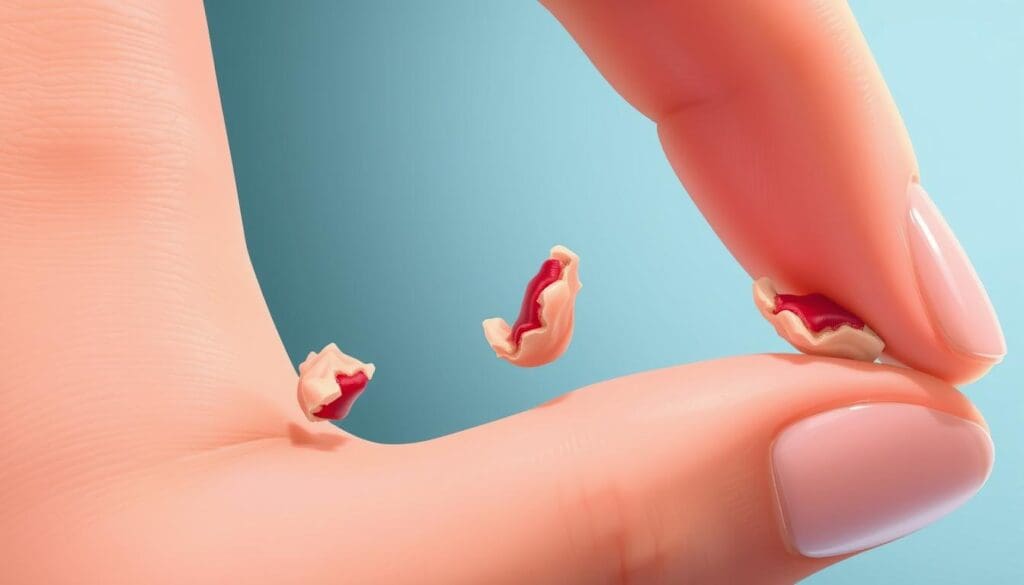
Typical Healing Progression
Nail bed injuries heal in a certain way. Small injuries usually heal in a couple of weeks, with slow but steady progress10. It takes about three months for a new fingernail to grow back fully after an injury10.
- Initial healing: 7-10 days
- Pain reduction: First two weeks post-injury10
- Complete nail regrowth: 3-4 months
Factors Influencing Recovery Time
Several important things affect how long it takes to recover from nail bed injuries:
- Injury severity: More serious damage takes longer to heal
- Patient’s overall health status
- Age and healing capabilities
- Following medical treatment plans
Signs of Potential Complications
It’s important to watch for signs of trouble during recovery. Look out for:
- Persistent pain beyond two weeks
- Signs of infection
- Abnormal nail regrowth patterns10
- Reduced finger mobility
Luckily, permanent nail damage is very rare10. Most people can fully recover with the right medical care and attention.
Recommended Actions for Nail Bed Reconstruction
Nail bed injuries need careful medical treatment to heal right and avoid future problems. Getting help from a doctor is key for serious nail trauma surgery6. About 10% of these injuries need emergency care, showing how important it is to see a pro6.
Doctors look at a few important things when talking about nail matrix reconstruction:
- How much damage there is to the nail bed
- If there are any bone fractures11
- The patient’s age and health
Professional Medical Intervention
Nail trauma surgery uses special methods based on how bad the injury is. For big subungual hematomas, doctors might suggest trephination or removing the whole nail6. The germinal matrix, which grows most of the nail, gets a close look during the repair11.
Surgical Options Available
Advanced nail matrix reconstruction might include:
- Vascularized nail bed grafts11
- Using fine sutures that dissolve on their own
- Composite grafting for really bad injuries
Follow-Up Care Considerations
After surgery, taking care of the nail is very important. Doctors often suggest wearing a splint for three weeks11. It can take 3 to 12 months for the nail to grow back, and it might look different for a while6. You’ll usually see your doctor a week later to check on how you’re doing12.
Home Remedies for Nail Bed Injuries
Nail bed injuries can be tough, but home care can help a lot. Knowing how to treat them right can speed up healing and avoid problems.
For nail bed injuries, there are many home remedies that can help. Fingernail injuries are common, and some can cause nail bed loss13. The germinal matrix is key for nail growth, making up 90% of it13.
Natural Healing Methods
- Clean the injured area gently with mild antiseptic
- Apply ice packs to reduce swelling7
- Keep the injured nail protected with a sterile bandage
- Elevate the injured hand or foot to minimize inflammation
Pain Management Techniques
It’s important to manage pain when fixing nail bed lacerations. Over-the-counter pain relievers can help with the pain. Recovery usually takes 6-9 months, based on how bad it is7.
| Injury Type | Home Treatment | When to Seek Medical Help |
|---|---|---|
| Minor Hematoma | Ice application, rest | If blood covers more than 50% of nail bed7 |
| Nail Bed Laceration | Clean, protect, monitor | Significant pain or signs of infection |
When Home Remedies Are Insufficient
Home treatments work well for small nailbed issues, but some need a doctor. Severe injuries might need the nail to be removed and special repair7. Look out for ongoing pain, a lot of bleeding, or infection signs that mean you need a doctor.
Important: Always consult a healthcare professional if you’re unsure about your nail bed injury’s severity.
Relevant Medical Specialties for Nail Bed Injuries
Nail bed injuries need a team of doctors to get better. Each specialist has a special role in treating these injuries. This team approach helps patients get the care they need for their injury14.
Orthopedic Surgeon’s Role in Digital Replantation
Orthopedic surgeons are key in treating complex nail bed injuries. They focus on fixing bone problems that come with these injuries. About 30-50% of severe injuries hurt the bone at the end of the finger, making their help vital14.
Dermatologists and Nail Regeneration
Dermatologists are vital for fixing long-term nail growth issues. Experts in nail bed injuries know they help with:
- Nail growth problems
- Healing soft tissues
- Preventing scars
Some people have unique nail bed structures, affecting 25% of the population. This shows why dermatologists are so important14.
Plastic Surgeons and Advanced Reconstructions
Plastic surgeons are key for complex nail bed injuries. They use advanced surgery to fix these issues. They might use tissue from other parts of the body to fix the nail15.
Working together, these doctors ensure patients get the best care. They focus on both fixing the injury now and improving how the nail looks and works later16.
FAQs About Nail Bed Injuries
Nail bed injuries can be complex and concerning for many individuals. Understanding the key aspects of these injuries helps patients make informed decisions about their treatment and recovery.
Categories of Nail Bed Injuries
Nail bed injuries encompass several distinct types:
- Subungual hematomas: Blood pooling under the nail17
- Nail bed lacerations: Cuts to the nail bed17
- Nail plate avulsions: Partial or complete nail separation17
Diagnostic Approach
Diagnosing nail bed injuries involves a comprehensive medical assessment. Physicians typically conduct:
- Physical examination
- Potential X-ray imaging to evaluate bone involvement11
- Assessment of injury extent and potential complications
Prevention Strategies
Preventing nail bed injuries requires proactive measures:
- Use appropriate protective equipment
- Exercise caution when handling tools
- Wear protective gloves during high-risk activities
Nail plate avulsion management might be necessary for severe injuries17. Subungual hematoma drainage can help reduce complications and promote healing17.
| Injury Type | Treatment Approach | Healing Time |
|---|---|---|
| Minor Hematoma | Conservative management | 1-2 weeks11 |
| Laceration | Potential stitches | 2-3 weeks17 |
| Avulsion | Nail removal possible | 3-6 months17 |
Key takeaway: Prompt and proper management of nail bed injuries is crucial for optimal recovery and minimizing long-term complications.
Conclusion on Nail Bed Injury Reconstruction
Nail bed injury reconstruction is a crucial medical process that needs careful attention and skilled hands. Our studies show that the success of this treatment depends on many things. These include getting help quickly and using the right surgical methods nail bed reconstruction strategies are key to fixing both looks and function of damaged nails18.
Research shows different ways to fix nail bed injuries with varying success rates. For example, methods that focus on the nail matrix have shown good results. About 36.4% of patients got excellent results, and 22.7% got very good results18. People aged 5-58 years got different treatments, like composite grafts and grafts from the big toe18.
It’s important to understand the detailed approach to fixing nail bed injuries. The germinal matrix, which is key for 90% of nail growth13, needs special care to avoid lasting damage. Doctors must choose the right surgery based on the injury, its size, and the patient’s needs for the best healing and nail growth18.
Looking ahead, patients should get professional advice and follow the recommended care. By taking preventive steps and getting help fast, people can lower the chance of long-term problems. This helps support successful nail bed reconstruction.
FAQ
What categories are included in nail bed injuries?
Nail bed injuries fall into three main types. These are subungual hematomas, lacerations, and avulsions. Each type needs different treatment and can range from minor to serious damage.
How are nail bed injuries diagnosed?
Doctors use a detailed physical exam to diagnose nail bed injuries. They might also use:
• Visual checks of the injury
• Tests for pain and sensitivity
• X-rays to check for bone injuries
• Exams of the wound’s depth and tissue involvement
• Special imaging for severe cases
Can I prevent nail bed injuries?
Yes, you can prevent nail bed injuries by taking steps. Wear protective gear, handle tools carefully, and keep your nails clean. Avoid tight shoes and wear gloves in risky situations. Be aware of hazards at work and home.
When should I seek professional medical help for a nail bed injury?
Get medical help right away if you have:
• Severe pain that won’t go away
• Large subungual hematomas
• Visible deformities
• Deep cuts or complete nail loss
• Signs of infection like redness or swelling
• Serious bleeding or tissue damage
How long does nail regrowth take after an injury?
Nail growth times vary by injury:
• Fingernails grow back in 4-6 months
• Toenails can take up to 12 months
• Healing speed depends on injury, age, health, and treatment
What home remedies can support nail bed injury healing?
Safe home remedies include:
• Clean the wound with mild soap
• Use ice packs to reduce swelling
• Elevate the injured area
• Take over-the-counter pain meds
• Apply antibiotic ointment
• Cover with a protective dressing
But, see a doctor for serious injuries.
Are surgical interventions common for nail bed injuries?
Surgery depends on the injury’s severity:
• Minor injuries might need simple procedures
• Moderate injuries could require nail removal and repair
• Severe cases might need advanced surgery
• The right treatment is decided by a doctor based on the injury.
Source Links
- https://emedicine.medscape.com/article/1242733-images
- https://teachmesurgery.com/plastic-surgery/hand-trauma/nail-bed-injuries/
- https://www.massgeneral.org/orthopaedics/hand/conditions-and-treatments/nail-bed-injuries
- https://sydneyorthopaedicsurgeon.com.au/hands/nailbed-injuries/
- https://www.lahandsurgeon.com/nail-bed-injury/
- https://emedicine.medscape.com/article/827104-overview
- https://www.medicalnewstoday.com/articles/nail-bed-injury
- https://pmc.ncbi.nlm.nih.gov/articles/PMC10498896/
- https://emedicine.medscape.com/article/80792-overview
- https://www.bssh.ac.uk/patients/conditions/1020/nailbed_injuries
- https://pmc.ncbi.nlm.nih.gov/articles/PMC3193631/
- https://www.plasticsurgery.org/for-medical-professionals/publications/plastic-surgery-resident/news/consult-corner-laceration-through-the-nail-bed
- https://pmc.ncbi.nlm.nih.gov/articles/PMC9462594/
- https://www.wheelessonline.com/bones/hand/nail-bed-injury-pathology/
- https://www.assh.org/handcare/blog/nail-bed-injuries-types-causes-and-treatment
- https://emedicine.medscape.com/article/827104-treatment
- https://www.healthline.com/health/nail-bed-injury
- https://pmc.ncbi.nlm.nih.gov/articles/PMC6882706/