“Technology is best when it brings people together, but we must ensure it doesn’t cost the earth,” said Satya Nadella, CEO of Microsoft. This quote highlights the big challenge we face in our digital world.
The cost of the metaverse to our environment is a big worry. As we move more into virtual reality, we see a mix of new tech and caring for our planet1. Today, digital worlds use a lot of energy, and by 2030, they might use up to 3% of the world’s electricity1.
Virtual world waste is growing fast, with 74 million metric tons of e-waste expected by 20301. We need action from tech creators, users, and governments. Digital sustainability strategies are now key for our planet’s health.
The metaverse could create over $1 trillion in value in the next decade1. But we must remember to care for our planet. Using green practices could cut carbon emissions by 50% compared to old ways1.
Key Takeaways
- Metaverse technologies may consume up to 3% of global electricity by 2030
- E-waste from virtual environments could reach 74 million metric tons by 2030
- Sustainable digital practices can reduce carbon emissions by 50%
- Consumer awareness about digital environmental impact is growing
- Innovative solutions are critical for balancing technological advancement and ecological responsibility
Understanding the Metaverse and Its Appeal
The digital world is growing fast, opening up new ways to interact virtually. This changes how we connect, work, and see reality. The metaverse is a big step forward, blending tech, social interaction, and digital impact2.
Defining the Digital Landscape
The metaverse is a new set of three-dimensional virtual worlds. Here, lots of users interact in real time2. It’s expected to grow, with over 1.5 billion people using VR and AR by 20252.
Popular Platforms Transforming Virtual Experiences
- Decentraland: A blockchain-powered virtual world
- The Sandbox: User-generated gaming metaverse
- Roblox: Collaborative gaming platform
Why Virtual Realities Captivate Users
The carbon footprint of augmented reality is offset by its amazing potential for immersive experiences. A survey found that 55% of shoppers want to try augmented reality when buying2.
| Platform | Key Feature | User Engagement |
|---|---|---|
| Decentraland | Blockchain-based Virtual Land | Decentralized Ownership |
| Roblox | User-Generated Games | Massive Youth Community |
| Meta Platforms | Immersive Social Interactions | $10 Billion Investment2 |
Virtual worlds offer unprecedented opportunities for connection beyond physical limitations.
Big names like Louis Vuitton, Walmart, and Nike are diving into these digital spaces. They’re making special communities and exploring new ways to engage virtually3.
The Digital Infrastructure Behind the Metaverse
The metaverse needs a complex digital system to work. This system powers virtual worlds, using a lot of energy. It’s the key to immersive digital experiences, linking users worldwide.
Servers and Data Centers: Powering Virtual Worlds
Data centers are the heart of the metaverse. In the U.S., they use about 2% of the country’s electricity. This shows how much energy virtual spaces need.
The big computers needed for detailed virtual worlds add to the problem. They make it hard to keep the metaverse green.
Energy Consumption in Virtual Spaces
Virtual spaces use a lot of energy in different ways:
- High-performance computing systems
- Constant data processing
- Complex rendering technologies
- Continuous network maintenance
Connectivity and Bandwidth Challenges
Bandwidth is key for the metaverse. Fast, reliable connections are needed for smooth virtual experiences. Building strong networks helps make digital spaces more efficient and sustainable4.
| Infrastructure Component | Energy Impact | Sustainability Rating |
|---|---|---|
| Data Centers | High | Moderate |
| Network Infrastructure | Medium | Good |
| User Devices | Low | Excellent |
The future of virtual environments depends on balancing technological innovation with ecological responsibility.
Environmental Impact of Data Centers
Data centers are key to our digital world, powering virtual reality and digital simulations. They handle huge amounts of data but have big environmental costs5.
The need for more computing power is growing fast. The Metaverse will need even more resources than the web does now5.
Carbon Footprint of Data Storage
Data centers use a lot of energy, leading to more carbon emissions. They are becoming a big part of global power use6.
- Energy use is going up as digital systems grow
- Cloud computing centers need a lot of electricity
- Blockchain technologies add to energy needs
Innovative Cooling Solutions
Old cooling methods are not very efficient. Air cooling blows a lot more air than liquid cooling5. New tech like GRC’s liquid cooling can cut energy costs by 95%5.
| Cooling Method | Energy Efficiency | Setup Time |
|---|---|---|
| Traditional Air Cooling | Low Efficiency | Months |
| Liquid Immersion Cooling | High Efficiency | Weeks |
E-waste Considerations
Fast tech changes lead to a lot of electronic waste. Virtual reality environmental implications include the whole life cycle of tech6.
The digital world’s infrastructure has a big environmental impact. We need new ideas and green practices to keep it sustainable.
Virtual Reality Hardware and Sustainability
The fast growth of virtual reality raises big questions about its impact on the environment. People in tech and environmental science are worried about the cost of the metaverse7.
VR hardware is a big challenge for the planet. Companies are working hard to make devices that use less energy and cut down on carbon emissions8.
Energy Consumption of VR Headsets
VR headsets use a lot of power when they’re on. Experts say we need to make them more efficient for better experiences8:
- High energy demand during device manufacturing
- Substantial electricity usage during operational phases
- Electronic waste generation from frequent technology upgrades
Lifecycle Assessment of VR Devices
Looking at VR devices from start to finish shows many environmental issues. We can lower greenhouse gas emissions with new tech8.
| VR Device Stage | Environmental Impact |
|---|---|
| Manufacturing | High carbon emissions |
| Usage | Significant energy consumption |
| Disposal | Electronic waste generation |
Innovations in Eco-Friendly Technology
Companies are finding ways to lessen VR’s harm to the planet. Some are using green energy and making servers that use less power8.
The future of virtual reality lies in balancing technological innovation with environmental responsibility.
New trends show hope for greener VR experiences. This could help lower our carbon footprint7.
The Role of Blockchain in the Metaverse
Blockchain technology is key in shaping the digital world’s impact on the environment. It links cryptocurrency transactions to environmental sustainability. This challenge is faced by developers and researchers9.
Energy Dynamics of Cryptocurrency Transactions
Blockchain networks use a lot of power, especially those with proof-of-work (PoW) mechanisms. Data centers and mining operations run all the time. This leads to a lot of electricity use and greenhouse gas emissions9.
- Blockchain networks like Bitcoin need a lot of computing power
- Continuous mining operations put a strain on power infrastructure
- High energy use affects the metaverse’s ecological sustainability
Sustainable Blockchain Alternatives
New blockchain models are tackling environmental issues. Proof-of-stake (PoS) systems are a promising alternative, needing much less energy9. Ethereum’s move to PoS is a big step toward greener blockchain tech.
| Blockchain Model | Energy Consumption | Environmental Impact |
|---|---|---|
| Proof-of-Work | High | Significant Carbon Emissions |
| Proof-of-Stake | Low | Reduced Carbon Footprint |
Balancing Decentralization and Sustainability
The Stellar network shows the ongoing challenge of balancing tech innovation with environmental care. They use about 481,324 kilowatt-hours of electricity yearly. This results in around 173,243 kg of CO₂ emissions10.
“Sustainable blockchain development is not just an option—it’s a necessity for our digital future.”
As metaverse platforms team up with green energy providers, cutting carbon footprints becomes more possible9. The digital world’s ecological impact can be lessened through new ideas and careful tech design.
Comparing Virtual Activities to Real-Life Alternatives
The digital world is changing how we do things. Virtual events, shopping, and tourism are now big. They cut down on harm to the environment thanks to new tech.
Virtual Events: A Sustainable Gathering Solution
Virtual meetings are better for the planet than in-person ones. They cut down on carbon emissions a lot. This is because they don’t need travel, which pollutes a lot11. The benefits are clear:
- Less pollution from cars and planes
- No need for big buildings
- Less energy used overall
Digital Commerce: Transforming Retail Landscapes
Digital shopping is changing retail for the better. Digital wearables and online stores are good for the planet12:
- Less pollution from making things
- Save a lot of water
- No need for physical stores
“Virtual technologies are redefining sustainable consumer experiences” – Digital Transformation Experts
Virtual Tourism: Exploring Without Traveling
Virtual tourism lets us see places without harming the environment. New tech lets us explore without flying or driving, saving the planet13. It’s a growing field with more to offer.
Choosing digital options helps us be kinder to the planet. It’s about using tech wisely for a better future.
Mitigating Environmental Costs in the Metaverse
The virtual reality world needs new ways to lessen its impact on the environment. As these digital spaces grow, making them sustainable is key for the metaverse’s future14.
The Metaverse faces big challenges in its digital setup. It uses a lot of energy and produces a lot of CO2 emissions14.
Best Practices for Sustainable Development
- Implement renewable energy sources for data centers
- Optimize coding for energy efficiency
- Design hardware with circular economy principles
Switching to renewable energy for data centers can cut down carbon emissions a lot15. New ideas include:
- Lowering energy use
- Reducing electronic waste
- Creating eco-friendly hardware
Innovations for Greener Virtual Worlds
New tech offers hope for greener virtual experiences. Energy-saving hardware and software can greatly reduce harm to the environment15.
Our goal is to make the Metaverse a digital space that cares for the planet.
Role of Government and Industry Regulation
Working together, governments, tech firms, and scientists must set clear green rules. They aim to guide the Metaverse’s growth in a way that’s safe for our planet14.
More research is needed to find green energy and solutions for the Metaverse’s environmental problems14.
The Future of Eco-Conscious Virtual Experiences
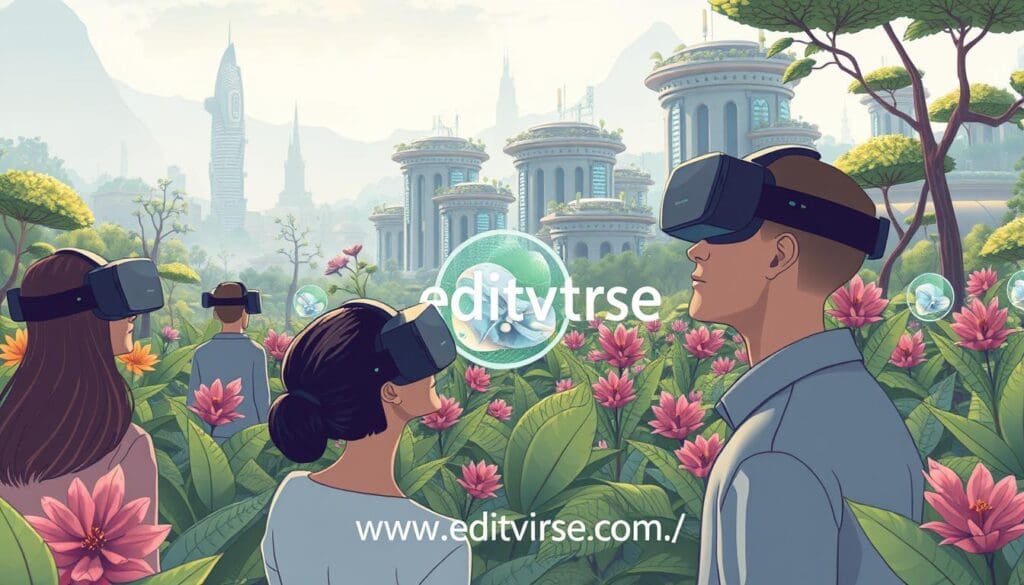
The digital world is changing fast, with a big focus on being green. As we face the challenge of digital carbon emissions, the metaverse is seen as a key player in making things better virtual reality sustainability efforts.
Emerging Sustainability Trends
Virtual experiences are changing how we tackle environmental issues. Digital solutions show great promise in cutting down carbon emissions in many areas:
- Virtual events can cut down on carbon emissions from travel16
- Digital clothes produce 97% less greenhouse gas than real clothes16
- Digital twins can cut building carbon emissions by 50%17
Community Green Initiatives
Technology groups are leading the way in green innovations in virtual spaces. The Ethereum Blockchain’s switch to proof-of-stake is a big win, cutting energy use by 99%16. Web3 technologies are seen as key players in reaching the United Nations’ Sustainable Development Goals.
User Behavior Transformation
Virtual reality isn’t just about tech; it’s also about changing how we think. By offering deep, educational experiences, these platforms can encourage us to live greener lives16.
The future of eco-conscious virtual experiences depends on our shared commitment to green digital innovation.
Conclusion: Navigating Sustainability in the Metaverse
The metaverse’s environmental cost is complex, blending digital innovation with ecological responsibility. It shows we need a smart way to develop sustainable tech. Our journey shows the importance of finding a balance in digital growth18.
Digital tech offers chances to cut down on carbon emissions. Events in the metaverse can greatly reduce pollution from travel. This is because people can join from anywhere, without needing to travel18. Virtual platforms also create jobs and help the environment18.
We face big tech challenges. Moving to web 3.0 might raise emissions at first. But, new tech like proof-of-stake can cut energy use a lot19. Investing in green tech could make the metaverse a leader in saving the planet19.
We need everyone to work together to make the digital world greener. By choosing energy-saving tech and using digital wisely, we can make the metaverse better for our planet20.
FAQ
What is the overall environmental impact of the metaverse?
The metaverse has big environmental problems. It uses a lot of energy in data centers and servers. It also needs a lot of power for virtual reality. This creates a lot of carbon emissions and hurts our planet.
How much energy do data centers for the metaverse actually consume?
Data centers for the metaverse use a lot of electricity. They use about 1-2% of the world’s electricity. One data center can use as much as 20,000 homes, which is a big problem.
Are there sustainable alternatives for metaverse infrastructure?
Yes, there are green options. We can use renewable energy and make servers more efficient. We can also cool them down better and use green computing. Companies like Google and Microsoft are working on this.
What is the carbon footprint of virtual reality devices?
VR devices make a lot of carbon dioxide. This includes making them, using them, and throwing them away. A VR headset can make about 50-100 kg of CO2 during its life.
Can virtual experiences actually help reduce environmental impact?
Virtual experiences can help the environment. They can cut down on travel and need for buildings. But, they only help if the tech behind them is energy-efficient.
How does blockchain technology affect the metaverse’s environmental sustainability?
Blockchain tech, especially proof-of-work, uses a lot of energy. But, changes like Ethereum’s proof-of-stake could make it more green. This could use less energy.
What strategies are being developed to make the metaverse more eco-friendly?
We’re working on many things. We’re making coding better, using green energy for data centers, and making devices last longer. We’re also setting standards for digital stuff.
Are there potential long-term environmental benefits to virtual worlds?
Yes, there are many benefits. Virtual worlds can save resources, help us work together from far away, and teach us about the environment. They can also test new green ideas for the real world.
Source Links
- https://www.mdpi.com/2071-1050/15/15/11704 – Environmental Sustainability of Metaverse: Perspectives from Romanian Developers
- https://www.brookings.edu/articles/metaverse-economics-part-1-creating-value-in-the-metaverse/ – Metaverse economics part 1: Creating value in the metaverse
- https://www.sps.nyu.edu/homepage/emerging-technologies-collaborative/blog/2023/the-metaverse-revolution-a-retrospective-on-the-past-year.html – The Metaverse Revolution: A Retrospective on the Past Year
- https://pmc.ncbi.nlm.nih.gov/articles/PMC10702132/ – The metaverse digital environments: a scoping review of the challenges, privacy and security issues
- https://www.grcooling.com/blog/metaverse-growing-threat-environment/ – Is the Metaverse a Growing Threat to the Environment?
- https://pmc.ncbi.nlm.nih.gov/articles/PMC10480596/ – Exploring the intersection of sustainable consumption and the Metaverse: A review of current literature and future research directions
- https://www.fxmweb.com/insights/the-metaverse-impact-on-sustainability-paving-the-way-for-a-greener-future.html – The Metaverse Impact on Sustainability: Paving the Way for a Greener Future | FXMedia: Solutions for Metaverse
- https://www.techtarget.com/sustainability/feature/Is-the-metaverse-bad-for-the-environment-Exploring-a-VR-world – Is the metaverse bad for the environment? Exploring a VR world | TechTarget
- https://smartliquidity.info/2025/02/07/environmental-impact-of-blockchain-based-metaverses/ – Environmental Impact of Blockchain-Based Metaverses
- https://www.pwc.com/us/en/services/digital-assets/blockchain-environmental-impact.html – Embracing sustainable innovation: understanding the environmental impacts of blockchain technology
- https://link.springer.com/article/10.1007/s10796-022-10364-4 – Chasing Metaverses: Reflecting on Existing Literature to Understand the Business Value of Metaverses – Information Systems Frontiers
- https://pmc.ncbi.nlm.nih.gov/articles/PMC11584446/ – Urban Digital Twins and metaverses towards city multiplicities: uniting or dividing urban experiences?
- https://www.mdpi.com/2624-6511/6/5/109 – Harnessing the Potential of the Metaverse and Artificial Intelligence for the Internet of City Things: Cost-Effective XReality and Synergistic AIoT Technologies
- https://papers.ssrn.com/sol3/papers.cfm?abstract_id=4616695 – Environmental and Climate Impacts of the Metaverse
- https://medium.com/@prathambhardwaj38/metaverse-and-sustainability-environmental-impacts-and-solutions-534e0c31de87 – Metaverse and Sustainability: Environmental Impacts and Solutions
- https://power.xyz/gaming/story/metaverse-sustainability/ – The Metaverse and Sustainability: Building a Better Future
- https://www.ey.com/en_us/insights/digital/metaverse-could-creating-a-virtual-world-build-a-more-sustainable-one – Metaverse: could creating a virtual world build a more sustainable one?
- https://hyperspace.mv/sustainable-and-eco-friendly-metaverse-events/ – Sustainable and Eco-Friendly Metaverse Events
- https://assets.kpmg.com/content/dam/kpmg/dk/pdf/dk-2022/Shaping the Metaverse towards sustainability_final.pdf – PDF
- https://www.ey.com/en_gl/insights/digital/metaverse-could-creating-a-virtual-world-build-a-more-sustainable-one – Metaverse: could creating a virtual world build a more sustainable one?